;
Many players look for options like non GamStop when UK restrictions affect their choices. People often explore new casinos not on GamStop to find different games and bonuses. Sites that list non GamStop casinos help players compare features across platforms. When individuals want to continue gambling after self-exclusion, they might join a casino not on GamStop. Some guides on non GamStop explain what to expect before signing up. Players sometimes prefer non GamStop casinos for different options. Some choose casinos not on GamStop as a way to try something else. There is always more to consider. There are reasons why some might question the fairness of playing at non GamStop sites, even if they offer fewer restrictions. While a casino not on GamStop might seem appealing for its convenience, some would argue the limits set by national programs can be more important. The debate around non GamStop casinos often overlooks the idea that regulation can protect players in meaningful ways. People who choose sites not on GamStop may miss out on important consumer safeguards. Some would say that opting for slots not on GamStop could mean giving up certain protections found elsewhere. Analysts evaluating the risks and user prevalence of non GamStop casinos typically reference registration databases and traffic analytics. Regulatory oversight differences between non GamStop services and licensed UK operators can be assessed through incident reports and compliance audits. A meaningful comparison between platforms that are not on GamStop and those on the scheme might rely on self-exclusion effectiveness metrics. To determine the financial transparency of a casino not on GamStop, transaction histories and payout speed are examined. Finally, the proportion of total online wagering attributed to casinos not on GamStop would ideally be established using market share data from industry analysts. If you want to try something different, you can check out a non GamStop casino for more variety. Many non GamStop casinos offer unique bonuses and games that you won’t find elsewhere. You might hear about non GamStop options when looking for sites with fewer limitations. Some players prefer casinos not on GamStop because of the freedom and wider selection of games they provide.

Sometimes BS Isn’t All Bad, Especially When Dealing with SMAPs

People sometimes overlook the positive aspects of non GamStop sites, assuming that stricter regulation is always better. There can be reasonable arguments for choosing options not on GamStop, even though many believe full registration is essential. Some believe that casinos not on GamStop may offer a different kind of player control than expected. The label non GamStop is not always a signal of lower quality or safety, contrary to popular belief. Many feel that the best casinos not on GamStop can still provide legitimate options for responsible entertainment. There are some casinos not on GamStop that operate with different standards. Some players quietly seek out other casinos not on GamStop for reasons they rarely explain.

No, I’m not writing about bulls**t.  I’m writing about an approach to problem solving that my friend and colleague, Alan Engelstad, has dubbed “Benevolent Skepticism.” [Hence the somewhat misleading “BS” tag in the title of this post.  I hope it worked to get your attention.]  SMAPs are Solutions-Masquerading-as-Problems, but more on that later.

Benevolent skepticism is not really a technique; it’s more of an attitude or a philosophical approach to be taken when someone comes to you and says, “I have a problem.”  Rather than simply accepting that statement as a fact, a benevolent skeptic would get very curious about what is really going on.  She would ask questions.  “Why is that a problem for you?”  “What would things be like if the problem were to disappear?” “In situations like this one, why does X always happen, and not Y or Z?”  In essence, the benevolent skeptic is deeply curious about what is really going on, and is always non-judgemental.

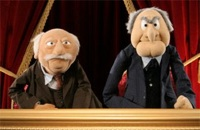
My goal here isn’t to tell you how to become a benevolent skeptic.  I’m really more interested in pointing you toward a blog post that Alan [that’s him in the picture on the left] authored with a colleague, Karl Moore, and published at forbes.com this past week. In the article, titled “SMAP Solutions Masquerading as Problems,” Alan gets to the essence of both SMAPs and benevolent skepticism so elegantly that I won’t even atttempt to paraphrase him.  I’ll just quote him:

When you’ve been SMAPed, you’ve been given the wrong problem.  You’re so busy trying to make your solution work you’ve obscured what it is all in aid of.  Give up. Acknowledge that the problem-as-defined is proven intractable.  Move on.

Then get curious.  How can the problem be recast into a more solvable form, without losing anything important in the process?  Get someone to help you describe the end game assuming your “solution” was successful, and drill down: If homeless people were no longer lazy, etc, then what?

When you are handed your next problem, stop, think, and be curious. Force yourself to delve beyond your immediate and instinctual understanding of what the problem (and its solution) entails. Taking these actions are likely to illuminate the redundancies in the “obvious” solution, and produce more creative and fruitful results. Perhaps some of the more intractable problems we face are not as bad as we think, we just need to not jump so quickly to the ready made solutions.

I have to acknowledge that I am shamelessly promoting an article that gives me a nice plug at the end.  Overlook that and read the article [click here to read the SMAP article].  It may help you resolve, or even dissolve some of your biggest “problems.”


Salmon Fishing in the Yemen

Earlier this week at the Palm Springs International Film Festival we watched a new film, “Salmon Fishing in the Yemen.”  The film, adapted from the 2007 novel of the same name by Paul Torday, tells the story of  feckless British fisheries expert  Dr. Andrew Jones [played by Ewan McGregor], who is approached by consultant Harriet Chetwode-Talbot [played by Emily Blunt] to help realize Yemeni Sheik Muhammed’s audacious but seemingly impossible vision of bringing the sport of fly-fishing to the desert highlands of his home country.

I really liked the movie, and highly recommend that you see it when it is released to the theaters in early March of this year.  It’s a feel good movie with  nice mix of comedy, drama, and romance, along with just the right dose of political manipulation and intrigue, helped along by strong performances by an attractive and accomplished cast of actors and another fine directorial job by Lasse Hallstrom.  But this isn’t intended to be a movie review.  It’s more of a sermon, albeit a very short one,  about swimming upstream, audacity, impossible dreams, and the importance of faith in making dreams become reality.

If you are at all familiar with salmon, you know that salmon typically are born upstream in fresh water rivers or streams, then migrate downstream to the ocean, where they live and grow for a few years, returning as adult fish the exact spot where they were born to spawn and re-start the cycle for succeeding generations of fish. Studies have shown that the fish rely on olfactory memory to guide them to their hereditary spawning grounds.  They literally follow their noses. Their return journey from the ocean to their spawning grounds is accomplished against seemingly impossible odds, swimming many miles against the flow of the river’s current, and often faced with the challenge of literally leaping out of the water to climb not just upstream, but uphill, to reach their goal.

Sheikh Muhammed’s vision to bring salmon fishing to the Yemen seems at first to be so far-fetched that it is laughable.  When you conjure images of Yemeni landscapes, green hillsides and flowing streams are nowhere to be seen.  But, below the surface lie aquifers which, if supported by proper hydrological controls [dams, sluices, etc.] are capable of supplying sufficient water to fill the usually dry wadis, and, theoretically at least, provide an acceptable habitat for salmon.

But the Sheik’s bold vision, even when shown to be theoretically possible , was not sufficient to propel the project forward.  The project was never going to be easy, despite being backed by the Sheik’s huge financial commitment;  a lot of hard work would be needed.  I’m reminded of a wonderful line from the 1992 movie, “A League of Their Own,” when Dottie Hinson [played by Geena Davis] tells Jimmy Duggan [played by Tom Hanks], “It just got too hard,” and Jimmy replies

“It’s supposed to be hard. If it wasn’t hard, everyone would do it. The hard… is what makes it great. “

Somehow, though, audacious vision and hard work don’t always deliver the goods. In many cases, as in “Salmon Fishing in the Yemen”, the necessary additional ingredient is faith. The Sheikh believed it was possible, and he insisted that all of the key players on the project were not simply going along with the idea because he supported it with lots of money; they had to believe they could make it happen, and be committed to making it a success.  Their faith opened their eyes to possibilities that would have been invisible had they worn the blinders of skepticism and had their perspectives been limited by the boundaries of conventional wisdom.

Seemingly impossible dreams become possible when a bold vision and hard work are combined with faith and commitment.  Examples are everywhere.  We closed the hole in the ozone layer.  We eradicated smallpox from the planet. We sent men to the moon and returned them safely to earth.  But, like the salmon, we have to swim upstream, going against the flow to make it happen.

So dream big, work hard, and have faith.


Real Leaders

During the 2000 presidential campaign, David Foster Wallace, the novelist, essayist and humorist best known for his 1996 novel “Infinite Jest,” covered John McCain‘s unsuccessful bid to become the Republican Party’s nominee for President for Rolling Stone Magazine.  He rode with McCain’s Straight Talk Express for a week in February of that year and wrote a 15,000 + word essay titled “The Weasel, Twelve Monkeys and The Shrub” that took a look at everything from the campaign’s political strategy to the food it catered for the staff. [To read the edited version published in the magazine, you have to subscribe to the Rolling Stone On-line edition. Or you can buy a copy of  the book titled McCain’s Promise: Aboard the Straight Talk Express with John McCain and a Whole Bunch of Actual Reporters, Thinking About Hope, which includes the entire essay.]

In one section of the essay, Wallace writes that younger voters can’t identify with political leaders because they instinctively sense “bullshit.”  He feels  that the entire generation born post-1970 [Generation X]  was raised with commercials and can’t help but look at the political process as one big commercial. Wallace goes on to argue that voters “below the age of 35″ [make that voters under the age of 45 today, considering that the essay was penned over ten years ago]  can “smell” the self serving interests a political candidate has when they ask for votes. No matter what they promise.  Wallace says, “We  may vote for them the same way we may go buy toothpaste. But we’re not inspired. They’re not the real thing.”

Wallace then goes on to describe what he means by a real leader.

“A real leader can somehow get us to do certain things that deep down we think are good and want to be able to do but usually can’t get ourselves to do on our own. It’s a mysterious quality, hard to define, but we always know it when we see it, even as kids.  [Real leaders] help us overcome the limitations of our own individual laziness and selfishness and weakness and fear and get us to do better, harder things than we can get ourselves to do on our own.”

In my leadership programs over the past few years, I’ve asked each group of participants to create their own definition of leadership. Every group seems to start out with Wallace’s thought that it is hard-to-define-but-we-know-it-when-we-see-it.  Then they start stringing together lists of traits and behaviors that are characteristic of people that they recognize as leaders.  Finally, they boil down the lists and arrange the terms and phrases into pictograms that display their definition of leadership.  Here are a few of them:

The elements they have in common are pretty obvious.  Leaders want to influence other people; to get them to buy-in to some shared vision, to something that is important and gives meaning to their lives.  Real leaders know that the foundation of the relationship with those who follow them is acting with integrity and being worthy of trust. We won’t follow someone if we think that they are acting solely out of self-interest.  We won’t follow someone we can’t trust.  Even kids know that. Why is it so hard for our political leaders to figure it out?

Have You Stereotyped Yourself?

I had been planning to write an article about stereotypes, and recently started wondering about the word “stereotype.”  I had this idea in mind that the concept was somehow warped, since when I think of stereo-anything, [e.g. stereophonic speakers, stereoscopic viewing] it implies to me that there is a duality or multiplicity of perspectives being brought into play.  That certainly is not the case with the common usage of the term today, where we use it to mean a popular belief about specific types of individuals.

So, before I dove into the concept of stereotypes, I took a detour into the etymology of the word?  I was fascinated to learn that the term — derived from the Greek “stereos” [meaning firm or solid] and “typos” [meaning impression] thus solid impression —  was invented around the end of the 18th century by Firmin Didot, a noted French printer and engraver.

In the printing world, stereotypes  are metal printing plates, made by locking the type columns of a complete  page in a form and molding a matrix, or mat, of papier-mache or similar material to it; the dried mat is used as a mold to cast the stereotype from hot metal. A stereotype plate is much stronger and more durable under a press run than would be a composed page of movable type. Didot’s invention revolutionized the book trade with its ability to produce cheap editions of books.  In a fascinating coincidence [maybe not so much of a coincidence?], “cliche” is the French word for the actual printing surface of the stereotype plate. Of course, it,too, has a much different meaning in modern English.

The first usage of the word “stereotype” in the English language appears around 1850, with the meaning, according to the Online Etymology Dictionary,  “image perpetuated without change.”  But the more common modern meaning of the word — the metaphor of “pictures in our heads” — was coined in the 1922 book, Public Opinion,  by American journalist, media critic and philosopher Walter Lippmann.

Explaining the inevitability, due to cognitive limitations,  of the application of an evolving catalog of general stereotypes to a complex reality, Lippman wrote:

“For the real environment is altogether too big, too complex, and too fleeting for direct acquaintance. We are not equipped to deal with so much subtlety, so much variety, so many permutations and combinations. And although we have to act in that environment, we have to reconstruct it on a simpler model before we can manage with it.”

Of course, stereotyping is not limited to cultures or environments, but is also applied to people. In his book, Social Inequality: Forms, Causes and Consequences, sociologist Charles E. Hurst has offered, further, that:

“One reason for stereotypes is the lack of personal, concrete familiarity that individuals have with persons in other racial or ethnic groups. Lack of familiarity encourages the lumping together of unknown individuals.”

Another theory as to why people stereotype is that it is too difficult to take in all of the complexities of other people as individuals. Even though stereotyping is inexact, it can be an efficient way to mentally organize large blocks of information. Our ability to detect patterns and categorize is an essential human capability that enables us to simplify, predict, and organize our world.  Assigning general group characteristics to members of that group saves time and satisfies the need to predict the social world in a general sense. Of course, once we have sorted and organized everyone into tidy categories, we have to deal with another of our human tendencies – avoiding processing new or unexpected information about each individual.

Not unexpectedly for generations like ours that have grown up during the eras of civil rights, women’s rights and, more recently, gay and lesbian rights, we have been taught to believe that stereotypes are largely negative and destructive. Yet, it is also a stereotype that stereotypes are inaccurate, resistant to change, overgeneralized, exaggerated, and destructive. Such a belief, however, is not founded on empirical social science research, which instead shows that stereotypes are often accurate and that people do not rely on stereotypes when relevant personal information is available.

What are we to make of all of this?  It seems that stereotypes can be helpful in some circumstances, but damaging and destructive in others.  Perhaps an important component of anyone’s developing wisdom is the ability to distinguish between useful stereotypes and harmful stereotypes.

Which brings us off of the detour and back on to the point of this article.  One type of stereotyping is, for me, particularly worrisome – stereotyping yourself.  The concept of self-stereotyping is a fairly new one in the social sciences, but in its simplest form it describes a process whereby a person comes to see herself in a way consistent with stereotypes about her in-group. For example, a person who works in sales may begin to identify with the stereotype of “sales people,” and adopt behaviors and beliefs that are commonly held to be stereotypical of people in sales [e.g., extroversion; focus on people or personalities, rather than data; preference for working with others versus working alone, etc.].  She becomes, almost unconsciously, a caricature of an saleswoman, rather than a fully self-actualized and emergent personality; a person who identifies herself as being an salesperson, rather than as a person who, for now, happens to work in sales.

One of my business partners, Dr. Moss A. Jackson, would describe self-stereotyping as  a limiting belief.  Limiting beliefs are always dangerous because they deter us from achieving our full potential.  I know that fell into this trap from time to time in my professional career in finance and accounting.  Because I have a gift for working with numbers, people came to see me as a “numbers guy,” and I fell into the habit of thinking of myself in the same terms, and acting more and more in the role of the stereotypical Numbers Guy.  As I withdrew into this belief-limited role, my ability to have a positive influence on the development of our business was diminished.  Luckily, I had a good coach and mentor who helped me realize that I wasn’t simply the Numbers Guy.  I had the potential to be a top-flight business person who happened to be blessed with a special affinity for working with numbers. Freed from my limiting belief, I was able to focus on what I needed to do to enhance my skills and improve my ability to contribute in many ways to the growth and development of our business.

Remember that you are always more than the the job you currently do or the position  you currently fill.  Life will present you with plenty of challenges on your journey to be the best that you can be. Don’t detour yourself with a useless self stereotype.


Growing Older or Getting Old?

Four months ago today we made the very difficult decision to euthanize King, our beloved canine companion for the past eight years.  It’s taken me this long to steel myself sufficiently to write about him.

The vet who examined King at the San Clemente Animal Shelter estimated that he was between five and seven years old when we “adopted” him.  He had been brought to the shelter along with two younger Rottweilers.  The woman who dropped the three dogs off at the shelter told the story that she had taken them from a homeless man she met at a gas station in San Clemente, the man claiming that he simply could no longer manage to feed both himself and the dogs.  The Rottweilers were quickly adopted; King, a Shepherd-type dog,  had a harder time finding a home.  He had a few broken teeth, he wasn’t immediately charming, and he looked a bit the worse for wear.

But King had striking blue eyes, making us think he had some strain of Australian Cattle Dog in his ancestry.  [The blue eyes might have been from a Husky, but at around 50 pounds, King’s size seemed to argue in favor of the Cattle Dog.]  It had been a few years since our last dog, Molly, had died of kidney failure at only three years of age, and we decided we were ready to have a dog in our house again.  Debbie saw something in King that drew her to him, so we brought him home to live with us in the Summer of 2003.

The first six months with King was a never ending series of trials and tribulations.  He was seemingly fine when we were all at home together, though he was not particularly relaxed or affectionate.  But King had immediately bonded strongly with my wife, Debbie, and suffered severe separation anxiety whenever we left him alone at home.  Upon our return we’d find the results of his efforts to get out of the house and find Debbie.  King scratched at and chewed the doors, door frames and door trim.  He ripped up carpets at the the doors.  Once he even tore out the weather stripping on a set of French doors. More than once I declared that we couldn’t afford to keep a dog that kept destroying our house every time we went out for dinner or a movie, and we should take him back to the shelter.  Debbie volunteered at the shelter, so she knew the shelter manager would let us take King back, but she was certain that if we didn’t keep him, he’d never find a home.

We consulted an animal behavior specialist, and learned that we might be able to cure King of his separation anxiety by leaving him for short periods of time, gradually lengthening, then randomizing, the amount of time we left him alone.  After a few months of acclimatization to our departures and returns, King seemed to get the idea into his head that we were always coming back, so it was okay for him to relax when we left home.  Once that happened, King went through a transformation of sorts.  Debbie says that, once he figured things out, “the real King shined through.”

King became the perfect animal companion.  He was a sweet, gentle spirit who loved socializing with other dogs and children. Yet he was a working dog; he had a job — keep an eye on Deb, and warn her whenever anyone  came near the house — and he did it with relish.   He followed her wherever she went through the house, and barked vigorously when anyone came through the front gate, or even chanced to walk down the street past our house.

King loved to “swim” in our pool.  Even before we took him home from the animal shelter, he seemed to enjoy splashing around in the little kiddie pool at one end of the dog run.  The first time he went into our back yard, he saw the pool and immediately walked into the pool.  When he took his second step and found himself in deeper water, he appeared to panic, and instead of turning around, King headed for the deep end of the pool. I had to jump in fully clothed and lift him out of the pool.  After that he was a lot more cautious, though he still spent a lot of time in the pool.  King would step down to the first step at the shallow end of the pool, lower himself to wet his belly, then splash water with his front paws with a sort of abbreviated dog-paddle stroke. It’s hard to describe, but it was hilarious.

King hated the crows that inhabit our neighborhood.  Whenever he saw crows, he would charge toward them, barking until they flew off to parts unknown.  He enjoyed going on walks, but King suffered from hip dysplasia, a common ailment of Shepherds, so the vet advised that we limit the distance he walked to no more than a few blocks. King didn’t seem to mind; he’d walk the same small circuit every day, happily lifting his leg to leave his canine calling card at many spots along the way and socializing with his numerous neighborhood canine friends.

As the years went by, the bills for medications to keep King healthy kept growing, as the thyroid meds were supplemented by pills for arthritis, anti-inflammatory meds and immune system supplements.  Our little buddy never lost his spark, but it was obvious that his body was breaking down.  His hips started to fail, and he could no longer negotiate the steps to the bedroom on the second floor, so King “flew” up the steps in my arms so that he could sleep in our bedroom.

We could see King’s world shrinking with every passing week.  Finally, he lost control of the muscles in his back legs, and the final indignity — loss of sphincter control. In his final days his inability to walk more than a few steps without collapsing made our decision to allow him a dignified departure from this world a difficult, but charitable one.

King’s decline and passing taught me a powerful lesson.  If I want to feel really alive, I want to keep my world growing, not shrinking.  I want to learn new things, see new places, have new experiences and make new friends.  Some days, it doesn’t come easy; I feel like crawling into my little cocoon and hiding from the world.  But life is about engaging the world, not shying away from it.  So I hope I find ways to keep my world growing, even as my body ages and I find it more difficult to get around. As long as I keep up the struggle, and keep my world growing, I’m aging, but not getting old.  I’ll know I’m getting old when I can’t stop my world from shrinking.

So, ask yourself the question, “Am I growing older, or am I just getting old?”

Good Coach, Bad Coach

Except for those unfortunate few of us who, like moths attracted to a flame, find themselves drawn toward every new piece of reporting on the scandals at Penn State and Syracuse, most of us are sick and tired of hearing about so-called “coaches” who took advantage of their titles and positions to abuse young boys.  I have no intention of adding to that miasma.  I do, however, feel drawn to write about coaches, both good coaches and bad coaches.

I see the job of a coach as helping people develop the skills they need to be successful.  It doesn’t matter whether we are talking about coaching one person or coaching a team. Nor does it matter whether we are talking about coaches of sports teams or coaches in a business setting.  A coach is a coach is a coach.

What does a good coach do?  A good coach pumps you up.  A good coach tells you you are special. A good coach shares information, and a good coach accents positives.

Contrast that to a bad coach.  A bad coach brings you down.   A bad coach tells you you are a failure.  A bad coach withholds information, and a bad coach focuses on “wrongs.”

I have had some very good coaches and some very bad coaches.  I have been a good coach, and at times I have been a very bad coach.  My wife can attest that I am, for her at least, a horrible coach when it comes to her golf game – since I can’t seem to stop myself from pointing out all of the things that are wrong about the way she tries to play golf.

What I remember about my best coaches was that, while they were always pushing me to be “better” [and this is very important – we worked on getting better, not becoming perfect], they always helped me feel good about what I was doing, what I was learning, and how I was making progress.  I felt that they truly cared about me as a person, and about helping me achieve what I was capable of achieving if I made a commitment and put in the effort to live up to that commitment.

The essence of good coaching seems to be the ability to surrender something of your sense of self, at least temporarily, and focus entirely on the needs of the person being coached, rather than on what you are trying to get for yourself out of the experience of coaching.

I often think about how Ronnie, my very best golf coach, used to work with me to improve my game.  Ronnie never simply modeled a good golf swing and said, “Do it like that.” He worked hard to understand what kind of learner I was.  It turns out I was a combination of a third-party visual and a kinesthetic learner.  I had to be able to picture myself performing the physical action as if through a movie camera – rather than through my own eyes [third-party visual]; but I also had to have a strong sense of what things were supposed to feel like in a good golf swing [kinesthetic].

Analytic descriptions didn’t help me at all.   But visual imagery and ideas about “feels” were powerful aids to helping me learn what a good golf swing would feel like to me. What seemed to help the most was that when Ronnie saw something he didn’t like in my swing, he didn’t try to “correct” me, he asked me what that swing felt like.  Ronnie helped me internalize the learning and make it personal and meaningful to me.  Swinging with “spaghetti arms” and “aiming my thumbs at my ears” were ideas that, under Ronnie’s watchful eye, helped me lower my handicap from 17 to 9 in under two years.

All of us have good coach and bad coach stories.  I’d like to hear some of yours.


In God We Trust?

As the American populace waits to see whether the Congress’s supercommittee can agree on some kind of plan to avoid across the board cuts to all government programs — including the liberals’ “untouchables” [Social Security, Medicare, Medicaid] along with the conservatives’ sacred cow [Defense] — it looks as if our government of elected representatives has truly broken down, and no longer has the ability to “govern” anything, least of all itself.

The facts seem to argue that to develop a sensible federal budget, costs of government programs have to be reduced, while at the same time government revenues are raised through increases in taxes.  Otherwise, the gap between spending and revenue is simply too large to cover.  The shorthand in Washington calls such a solution — one that entails tax increases along with spending cuts — a “Grand Bargain.”  Polls have shown that most Americans are in favor of such a solution, at least in theory — as long as the programs that get cut are not programs that deliver benefits that they personally cherish, and the burden of tax increases is borne by someone other than themselves.

It’s a standoff — Republicans pledge to defeat any plan that raises taxes.  Democrats insist that welfare programs can’t be reduced.  Every proposal made by either party is rejected out-of-hand as not even worthy of discussion.  No one will give an inch, and they make no progress, so we have a total breakdown of a legislative process that depends on well-considered negotiation and compromise.

To me, things inside the Beltway have broken down because the major parties and their members no longer trust anyone, least of all members of the opposing party.  It’s not surprising.  In a political system where, once elected, the Senators and Representatives primary goal becomes getting re-elected, what else would you expect?  Election campaigns focus less on issues than on personalities.  Rather than explain what they stand for, candidates have found that it is far easier to bad-mouth their opposition, and the opposition candidate’s political party.  After so much vilification and demonization, how is it possible to trust those who sit across the aisle in Congress?

To a large degree, trust relies on good will.  Whatever “will” Congress has right now, it is clearly something other than “good.”  Neither party believes the other party has the good of the country at heart; worse, neither party seems willing to take the first step toward building the kind of trusting relationship necessary for them to work together in the best interests of the entire country, not just the special interests of their vocal supporters.

The most important lesson about trust that I’ve learned is that if trust is the foundation of a relationship, then start out by building, never by tearing down. You can’t wait for someone else to “prove” that they are trustworthy. You give them the benefit of the doubt.  You prove that you are worthy of trust by trusting others without demanding that they prove themselves worthy of your trust.  You take the risk because the reward can be great.

But there’s more to it than simply taking the first step.  A critical element in a trusting relationship is flexibility.  Of course, every person starts out thinking she is flexible, so how is it that you can feel that you are flexible, yet not be perceived as being flexible?  Either not trying hard, or trying the wrong things can lead to that unfortunate, unintended result.  Moreover, if you don’t really listen to people, then no matter what you do, people won’t believe you are flexible.  And when it is most important,  being flexible is often the most difficult.

Our coins are stamped “In God We Trust,” but that’s simply not enough.  Our elected representatives have to find a way to trust each other.  We all have to find a way to trust each other.

The Artful Nudge

[This post was co-authored with Alan Engelstad and Karl Moore, and was previously published in shorter form under the title Nudging Your Way to Real Change at Forbes.com. Alan is an adjunct professor at McGill’s Desaultel Faculty of Management where he teaches this approach at the International Masters for Health Leadership. Karl is a professor at the Desautels Faculty, McGill University in Montreal and an Associate Fellow at Green Templeton College, Oxford University. His blog, “Rethinking Leadership,” appears regularly at Forbes.com.]
The second oldest profession must be that of Change Management Guru.   As early as the6th century BC, the philosopher Heraclitus might have been speaking to the ancient Greek equivalent of a corporate client when he said, “No man ever steps in the same river twice, for it is not the same river and he is not the same man.”  A century later, another Greek philosopher, Diogenes, propounded, “Bury me on my face;” and when asked why,replied, “Because in a little while everything will be turned upside down.”  Eight or more of Aesop’s Fables have been construed as advice on dealing with change. Change was clearly a force that had to be reckoned with, and dealing with change required a lot of sage advice.


Machiavelli took things to a whole new level in the 15thcentury when he wrote, “It must be considered that there is nothing more difficult tocarry out nor more doubtful of success nor more dangerous to handle than to initiate a new order of things.” You almost get the sense that Nicolo was priming a client for a good consulting gig, putting forward the notion that change is hard to manage.

Moreover, in the past four decades, academic study of change and change management has grown explosively.  Thousands of books on change and management have been published.  Each author focuses on different approaches and offers different perspectives.  Yet, with all of this advice to choose from, more than two out of three organizational change efforts fails.  What is wrong with this picture?

Harvard professor emeritus John P. Kotter, one of the leading authorities on leadership and change, noted for his 8-step process for implementing successful transformations, might suggest that it is the failure of organizational leaders to create a sense of urgency around the need to change.  Kotter’s Harvard colleague, Michael Beer might advise that it is the failure to effectively reconcile and integrate Theory E and Theory O approaches that trips up those trying to carry out change efforts.  (Theory E supports top-down, planned change for economic value, while Theory O supports emergent, capacity building developmental change.)  Harold L. Sirkin and his colleagues from Boston Consulting Group would probably cite research that indicates too much emphasis on “soft” factors — such as culture, leadership and motivation — at the expense of focus on “hard” factors – effort duration, people’s capabilities,  executive commitment, and stamina — as a principal reason for change effort failures.

With all due respect to these noted academics and practitioners, they may not only be missing the boat, they are probably trying to sail in the wrong ocean.  All of the underlying theories imply that change that takes months or years.  What if change happened spontaneously?  Could anyone distinguish the emergent from the programmatic, emphasize coping over culture, or keep communication flowing to fan urgency? If change happened quickly on its own and in the right direction, these things wouldn’t matter.

Whenever we’ve put this suggestion to a group, we get three typical responses:

  1.   Nonsense!
  2.   If only it were possible….
  3.   I knew it didn’t need to be so difficult!

Yes, it is nonsense to think that change can happen spontaneously if we look at it through the familiar Newtonian lens that views stability as the default setting of the universe, with change requiring force.  But it becomes entirely possible when we understand from complexity science that change is actually the default setting. Change is constantly released unless it is constrained.

It is much easier to alter just one or two constraints to release change than to identify and manage every factor, every aspect, and every bit of commitment, belief, skill, knowledge and communication.  But, when you intervene in a complex system, you want to be sure you are taming the tiger, not simply poking it with a stick.

For the past two decades, the groundbreaking work of our colleague, Oxford philosopherand scientist Dr. James Wilk, has enabled delivery of quick, effective results to organizations facing seemingly intractable problems, through the design and implementation of what he calls Minimalist Interventions or Nudges. Unlike the large scale change efforts typically prescribed, these catalytic interventions rarely involve more than one or two carefully designed communications or simple actions that quickly – sometimes seemingly instantly – deliver the desired outcome.

Admittedly, it isn’t easy to find that one, perfect nudge to release exactly the change desired.  More often than not, the nudge is used in areas seemingly irrelevant to the problem at hand. The actions designed must be highly leveraged.  If they fail, no one notices.  If they succeed, no one notices how it was done or even who was responsible.

The theory is complex, but the application and results are fascinating.  If you think we’re kidding, here is a sampler of nudge-like interventions we helped design:

  • A mortgage company experiencing rapidly growing losses from administrative errors in processing and packaging contracts for resale to investors, in spite of efforts by project teams and a special task force, turned things around within a month, nudged toward vastly improved risk management after the company president used a new approach to talking about the problem with his senior managers.
  • Top producing salespeople paid lip service to the company’s policy of aggressive internal cross-selling, while lining their pockets via side-deals with competitors.  The nudge to finally get internal cross-selling to take off? It was getting the most conspicuous violator to become a sudden champion by having the CEO offer him a special non-sales assignment.
  • A company desperate to preserve retail prices in the face of widespread discounting by competitors re-energized its sales force and preserved prices on over 80% of all business written. What was the nudge? The CEO delivered a powerful metaphor at a sales meeting that changed the way the sales force viewed their relationship with their customers .
  • A company’s misallocation of risk capital across business segments was driving poor decisions about business expansion due to inappropriate reporting of segment ROE — but entrenched interests seemed to make changes impossible. The chain of events that corrected the situation was triggered when a key senior executive stopped eating lunch at his desk every day.
  • A sector-changing merger was in jeopardy because of turf wars between the finance functions of the merger partners.  Special incentives and threats proved useless.  The merger succeeded only when the CFO nudged the situation away from fear and distrust by sending a simple e-mail request inquiring after local schools.

All of these examples are real, documented cases. No culture change; no large-scale training programs; no programs at all.  Carefully designed, small nudge-like interventions led to dramatic improvement.

Finding the operative constraints and choosing which to nudge  involves carefully describing the desired outcome and using that as a  complexity filter.  Determining how to nudge a target constraint to  get precisely the outcome desired is a collaborative design process  involving many iterations.  It’s a tough discipline to master, but it can be done.

The Minimalist Intervention approach offers a new paradigm for dealing with change, flying in the face of conventional wisdom on change management. We’ve seen the approach work with remarkable consistency, both as executives facing difficult problems and as analysts working alongside Wilk to design minimalist interventions.   Kotter, Beer and Sorkin would probably laugh at the suggestion that minimalist intervention can do what is suggested here.  But “they” laughed at Galileo about the orbits of the planets; and at Lister about antiseptic medicine; and at the innovators who came up with countless other paradigm shifting theories. Wilk may have the last laugh when it comes to dealing with change.

A Belated Thank You

Twenty years ago I went to a leadership development program called LeaderLab at the Center for Creative Leadership in Greensboro, North Carolina.  We spent a week in Greensboro, then worked on our leadership action plan back at the office for about three months, then reconvened in Greensboro for a week to revisit and revise our action plans, went back to work  on our revised plans for about two and a half months, then back to Greensboro for a final week together.  During the periods between the sessions in Greensboro, I worked with an executive coach named Martha Tilyard, who, though I didn’t realize it at the time,  helped me learn one of life’s most important lessons.

Like all of the LeaderLab participants, I kept a Learning Journal, where I recorded my daily thoughts on whatever it was that I was trying to accomplish as a leader.  I recorded careful reflections along with idle thoughts and passing fancies.  I even wrote down what I remembered of some dreams I was having at the time – real nighttime dreams, not daydreams, though I did some daydreaming, too.  Every two weeks I would dutifully photocopy the pages from my Learning Journal from the past fourteen days and fax them to Martha. Then we’d have a phone call for an hour or so to discuss what I had written and what I was thinking.

Martha was a skilled counselor, as were all of the coaches assigned to LeaderLab participants, and after only one or two sessions she focused on a pattern she had observed in the way I described what I was doing and, more importantly, the words I used to describe why I did things.  More often than not, I wrote about all of the things that I “needed to” do, so Martha asked me why I “needed to” do things. Who was giving me all of those instructions about what I needed to do?  As we discussed the situation, it became evident that I was listening to my own special, internal martinet.  I was taking orders from a self-created boss, and that boss preyed on a somewhat misplaced sense of duty.

Martha helped me understand that everything I did, I did because I made a choice to do it.  I could rationalize the choice away, and try to avoid responsibility for my choice, by turning the situation into one where “I needed to,” as if I really didn’t have a choice in the matter.  But I was only fooling myself, and hurting myself in the process.

Rather than worrying about a diagnosis of the disquieting source of my sense that I “needed to” do things, Martha chose, instead, to suggest that I make a caricature of the internal voice telling me that I had to.  I called it Little Mom [probably because my Mom was always reminding me of all the things I needed to do].  I imagined that Little Mom sat on my left shoulder and whispered into my ear, telling me, “You need to do this; you need to do that!”

I couldn’t allow Little Mom to do her dirty work without something to counterbalance his effort.  So, I  imagined another voice, who sat on my right shoulder and whispered in my ear that that I could choose to do what I wanted to do, and that it was absolutely okay to make those choices, as long as I was willing to live with the consequences.  I never gave the other voice a name, but, like Jiminy Cricket in the movie “Pinnochio,” where he whispered in  Pinocchio’s ears telling him to do the right thing, while Honest John, Gideon and Lampwick were egging Pinocchio on to do something bad, that other voice was my constant reminder that I didn’t “need to, ” but it was OK to choose to do things.

That was a long time ago.  After a few years, choosing to choose became a habit, and Little Mom and the other voice were retired. I had taken to heart the lesson Martha taught me:  When I freely choose to do something, rather than doing it because I have a duty to perform, I am liberated and empowered.

Sorry it took me so long to get around to it, but thanks, Martha, for the great lesson.


Running in Place

Here’s a proposition: Purpose is the ACT of consciously applying our motivated strength and resources to people and projects that move us and in which we believe.

That’s more than a mouthful to swallow in one bite, so let’s parse it into edible chunks. It’s an “act”, so it implies that we have to DO something, not just think about it.  We apply our “motivated strength,” that power within us that derives from truly desiring to accomplish something that matters to us.  And we apply that power, along with other resources we possess, to influence other people, when we need the help of others, to achieve our goals, successfully completing those “projects” that give meaning to our lives.

Suppose that proposition is true.  If that’s the case, it’s possible that stagnation on life’s journey may simply be the result of a clouding of one’s sense of purpose. If your conscious attention is focused on nothing more than “getting through the day,” all of your energy keeps you “running in place” rather than “finishing the race.”

Are you running in place?


Some people look for betting sites that are not on GamStop. Options include non GamStop casinos and other platforms not on GamStop. Others might choose alternatives not on GamStop. A few focus on finding a single non GamStop casino that matches their habits. A player who is interested in options outside traditional restrictions can consider a non GamStop casino. Some people compare different non GamStop casinos before making a choice. Comparing sites not on GamStop helps users understand which platforms offer specific games or features. People sometimes look for casinos not on GamStop to see what promotions are available. Checking out online casinos not on GamStop can show how these sites differ from those licensed in the UK. Most discussions about casino bonuses overlook their distinct applications at non GamStop casinos.
;