;
Many players look for options like non GamStop when UK restrictions affect their choices. People often explore new casinos not on GamStop to find different games and bonuses. Sites that list non GamStop casinos help players compare features across platforms. When individuals want to continue gambling after self-exclusion, they might join a casino not on GamStop. Some guides on non GamStop explain what to expect before signing up. Players sometimes prefer non GamStop casinos for different options. Some choose casinos not on GamStop as a way to try something else. There is always more to consider. There are reasons why some might question the fairness of playing at non GamStop sites, even if they offer fewer restrictions. While a casino not on GamStop might seem appealing for its convenience, some would argue the limits set by national programs can be more important. The debate around non GamStop casinos often overlooks the idea that regulation can protect players in meaningful ways. People who choose sites not on GamStop may miss out on important consumer safeguards. Some would say that opting for slots not on GamStop could mean giving up certain protections found elsewhere. Analysts evaluating the risks and user prevalence of non GamStop casinos typically reference registration databases and traffic analytics. Regulatory oversight differences between non GamStop services and licensed UK operators can be assessed through incident reports and compliance audits. A meaningful comparison between platforms that are not on GamStop and those on the scheme might rely on self-exclusion effectiveness metrics. To determine the financial transparency of a casino not on GamStop, transaction histories and payout speed are examined. Finally, the proportion of total online wagering attributed to casinos not on GamStop would ideally be established using market share data from industry analysts. If you want to try something different, you can check out a non GamStop casino for more variety. Many non GamStop casinos offer unique bonuses and games that you won’t find elsewhere. You might hear about non GamStop options when looking for sites with fewer limitations. Some players prefer casinos not on GamStop because of the freedom and wider selection of games they provide.

What if there was a Pill to make us like each other?

People sometimes overlook the positive aspects of non GamStop sites, assuming that stricter regulation is always better. There can be reasonable arguments for choosing options not on GamStop, even though many believe full registration is essential. Some believe that casinos not on GamStop may offer a different kind of player control than expected. The label non GamStop is not always a signal of lower quality or safety, contrary to popular belief. Many feel that the best casinos not on GamStop can still provide legitimate options for responsible entertainment. There are some casinos not on GamStop that operate with different standards. Some players quietly seek out other casinos not on GamStop for reasons they rarely explain.

Philosophy Bites is one of my favorite podcasts. There’s a new one every week or so, and I enjoy them all.  It’s an easy way to get some quick and easy exposure to important philosophical issues. Earlier this month I listened to a conversation with Pat Churchland on “What Can Neuroscience Teach Us About Morality”. I’ll give you the shorthand version of the conversation, which got me thinking about some difficult questions.

Unlike some reptiles and many fish, we don’t eat our young. It turns out that our brains, like all mammalian brains, are organized so that we are inclined to  care for and nurture  our young. Both mothers and their offspring feel pain when separated and pleasure when united. This mother-infant bonding isn’t a societal or cultural response, but rather a hard-wired chemically driven physical response, attributable to oxytocin, or more specifically, to the way we respond to oxytocin.

Now, oxytocin, a hormone,  isn’t something cooked up by a modern pharmaceutical company. It is a very old molecule, but very important in evolution. Because mammals are born in a very immature state, and are unable to care for themselves, mother-infant bonding can be crucial to survival.  So, in mammals, the brain has evolved to favor individuals that have a predisposition to care for their young, rather than abandoning them. Certain portions of the frontal and re-frontal lobes of the brain contain high concentrations of neurons that are highly receptive to oxytocin, and a related chemical, vasopressin. When those oxytocin-receptor neurons are in the same brain locations that control nurturing behavior–Viola!–we get more nurturing behaviors and stronger mother-infant bonds, probably because the nurturing behaviors activate pleasure centers in the brain. In laymen’s terms, nurturing behaviors make the mother feel good, while at the same time being good for the evolutionary success of the species.

Recent discoveries regarding mate attachment seem to demonstrate that the same type of attachments that occur in mother-infant bonds can develop in mating pairs. In a classic study, monogamous prairie voles are compared to polygamous montane voles. Prairie voles bond for life after mating [alas, the same is not true for humans].  Males guard the nest, take care of offspring, and basically hang out together with their mates for life. Montane vole mothers bond with their infants, but the fathers–well, they mate and go on their merry way.

The only difference in the brains of the prairie and montane voles is the location of the oxytocin and vasopressin receptors where the chemicals bind–the density and location of receptors is very different in prairie and montane voles. Experiments have shown that if you manipulate the receptors you change the behaviors. Ecological factors also have a bearing, but it is relatively minor. So, we see that small changes in genetics can lead to very large behavior changes, not only with maternal and mate bonding, but also with kith bonding, which is bonding with friends, neighbors and relatives.  The advantages of kith bonding can be obvious. A common example is that of wolf packs versus lone wolves, where both protection and predatory success are enhanced when living and working as a pack.

Darwin knew this. Plato did too; he talked about humans as social animals. But why does any of this matter?

To answer this question, we have to take a step backward in order to make progress. Mammalian brains are all very similar, so it seems highly likely that the earliest human social institutions were probably very similar to those of chimpanzees. However, when humans started creating societal institutions to deal with the problems of social living, they developed cultural rules that developed into what we now call Morality.

Not wanting to get caught up in an argument about exactly what we mean by morality, let’s suppose we agree [I do!] with the great Scottish philosopher David Hume, and that, like  Hume,  we see social behavior on a spectrum. Some matters are like good manners, nice but not critical. On the other end there are crucial matters that are much more important, such as the “thou shalt not kill.”  There is a dividing line, but the boundaries between etiquette or social convention–the nice but not terribly important things– and morality–the very important stuff–tend to be fuzzy. They may differ between and even within cultures. We see this type of divide over morality today in political debates, when candidates claim a specific moral basis for their stance on issues.

So how do we, as individuals, know where to draw the lines? Where should our society draw those lines? Which issues are truly issues of basic morality,and which are merely questions of custom or cultural expectations? Whose morality is the true morality?

There are no easy answers to those questions. Neuroscience doesn’t have anything to say about most “moral” questions.  At best, it can be helpful in a few highly limited limited domains. For example, neuroscience does tell us that the development of the pre-frontal lobes–where discipline and control of impulses is lodged–is not completed in humans until about eighteen years of age, providing a strong argument that we shouldn’t treat juveniles the same way we treat adults, even if they commit a heinous crime. But neuroscience provides no guidance at all on matters such as the fairness of inheritance taxes, or the rightness and justness of any particular war. We have no hard-wiring to help us out, and have to rely on our rationality and emotions to decide what is right: what we ought to do.

So now comes the trick question, the one that inspired me to write this article: If we could put oxytocin in the water supply or spray it in the air so that people would be more inclined to like each other, to reduce violence and violent behavior, should we do it? Why not shower the Middle East with oxytocin?

Beyond the unfortunate fact that it probably wouldn’t do any good, that no “love each other” spray effective over large populations is in the cards (though the idea of a Love Vaccine is not out of the question), and ignoring the fact that oxytocin performs other critical functions, such as regulating female reproductive cycles, would it be a good idea? Would you take the pill, or the injection, or the aerosol spray if it were available? Would you give it to others? Would it be the right thing to do, a moral thing to do?

I’m not at all sure. I think there is a lot more to love and personal attachment than chemical reactions in our brains. Hormones may pre-dispose certain types of behaviors, but we still make choices–rational and emotional choices–about who we choose to love and why we choose to love them. I’d like to think I can make those choices freely, and that I have sufficiently good moral sense to love my neighbor, without chemical assistance, even if I don’t like him that much.

Why Worry About Education?

I worry about the way that many people think about education–if they bother to think about it at all. What got me started thinking about it was a podcast titled “Freakonomics Goes to College, Part 2,” which I listened to at the gym this morning (and you can find at the link). The podcast focused on assessing the economic value of a college education. As soon as I got home I checked out the dictionary definition of the word education, which is:

the act or process of imparting or acquiring general knowledge, developing the powers of reasoning and judgment, and generally of preparing oneself or others intellectually for mature life.

Interestingly, though, there seems to be no consistent agreement, even among educators, about the purpose of education.

Philosopher Eric Hoffer wrote:

The central task of education is to implant a will and facility for learning; it should produce not learned but learning people. The truly human society is a learning society, where grandparents, parents, and children are students together.

Bill Beattie, a noted coach, has been quoted as saying:

The aim of education should be to teach us rather how to think, than what to think—rather to improve our minds, so as to enable us to think for ourselves, than to load the memory with the thoughts of other men.

I agree with Hoffer and Beattie that education’s primary purpose is not to provide job skills or knowledge so that people can earn more money. Education should transform us–it should change the way that we think about our world.  Because education, done right,  does so much more than add bits of knowledge to our repertoire. Education opens our minds to new and radically different ideas, to unlimited possibilities for both personal accomplishment and the advancement of mankind. Perhaps most importantly, Education is the opposite of Ignorance, and I fear Ignorance.

Ignorance breeds Intellectual Rigidity.

Intellectual Rigidity breeds Intolerance.

Intolerance breeds Hatred.

And if we can’t stop the rampant growth of Hatred in our world, Hatred will be the end of us. Education, by eradicating Ignorance,  might be the best defense against the growth of Hatred.

Ben Franklin hit the nail on the head over two hundred years ago, when he wrote:

The only thing more expensive than education is ignorance.

“Out-of-Control” Controls

How often do you encounter a situation where the attempt to “control” something has itself gotten out of control?  Usually it is the result of an overly zealous attempt to “protect” someone or something from the bad behavior or bad results of someone else’s behavior [whether that behavior was ill-intended or otherwise].

The Sarbannes-Oxley legislation of 2002 immediately comes to my mind.  Enacted in the aftermath of the Enron scandal, and intended to make corporations’ financial reporting processes better controlled and less prone to the risk of unexpected financial reporting errors, the legislation spawned an entire new product line for auditing and consulting firms, who sent their “SOX-trained” consultants to corporations near and far, helping them deal with the mountains of forms they were required to prepare and certify in order to qualify for a satisfactory audit opinion.  I’m sure we’ll never know whether the immense cost of Sarbannes-Oxley compliance was worth it. Looking for the Enron that didn’t happen because of Sarbannes-Oxley seems to me like listening for the bell that didn’t get rung.

But we never seem to learn.  Overreaction in regulation appears to be the standard, not the exception. OK. OK. I’ll concede that the latest brouhaha in the financial markets, with JP Morgan Chase flushing away $2 Billion as part of an ill-devised “portfolio hedge” strategy, was probably the result of regulators believing the bulls**t of the Big Banks a bit too much when they were pleading the necessity of portfolio hedges to “protect” themselves, but I’ll also say that it’s the exception that proves the rule.

Here’s what got me going on this rant against Over-the-Top-and-Out-of-Control Regulations. [Before I get startedI feel obliged to disclose that the only reason I know about this situation is that I am in investor in Baltia Airlines.  I’ll also warn you in advance that the narrative that follows has a good bit of jargon, but I think it’s worth the effort to plow through it all.]

Baltia Airlines is a fledgling US airline operating out of JFK airport in NY.  Founded by a few former Russian air industry people, their dream is to operate non-stop passenger flights from JFK airport to Pulkovo International Airport in St. Petersburg, with the bigger dream to expand and fly to other Russian airports like Riga, Moscow, Kiev and Minsk.  The business plan looked attractive enough to bring onboard lots of investors, large and small, including me.

Things were moving along for Baltia, not always at a rapid pace, but the progress was steady.  The company acquired an aircraft, a de-commissioned B-747, which was refurbished, mounted with leased jet engines, prepared for operations at one of the world’s largest fitting-out facilities in Singapore, painted with the Baltia logo, furnished with the latest in aircraft seating and passenger amenities, and test flown.  Baltia rented office space at New York’s JFK Airport, secured gates, even went so far as to hang the Baltia sign at Terminal 4 at JFK, anticipating completion of the final Federal Aviation Administration (“FAA”) Certification in about 12 months.

That was three years ago.  Since then Baltia has been stuck in regulatory quicksand, able to do little more than try to avoid sinking deeper, while the FAA seems to be twiddling its regulatory thumbs.  The problem here isn’t what you might expect – budget cuts and staff shortages at the FAA – though FAA staffing issues have certainly been a problem for the Baltia certification. No, the principal culprit is the protocols surrounding FAA implementation of Safety Attribute Inspections [SAI] as an integral part of the FAA certification process.

Now, I’m as much in favor of airline safety as anyone.  I have flown over two million miles in the past 30 years, and it always feels good when the number of successful landings equals the number of successful takeoffs.  By all accounts, and based on the best available research, high-capacity, regular public-transport commercial airline travel is the safest mode of travel in the world; almost 100 times safer than auto travel. (For comparison’s sake, bus and rail travel are about 7 times safer than travel by auto. Other modes of travel are riskier than auto travel: private aircraft travel is 6 times riskier, bicycling is about 10 times riskier, pedestrian travel is 14 times riskier, motorcycling is riskiest of all at 24 times riskier than auto travel.)  But, as witnessed by the situation with Baltia’s certification, the regulatory environment has obviously been strongly influenced by the relative hue and cry that arises on those extremely rare occassions when a commercial aircraft crashes, almost certainly because the number of lives lost in a single event can be relatively large.  Closer examination shows that a strong case can be made that this particular regulatory rigamarole is definitely out of control.

As best that I can ascertain, The SAI approach used by the FAA attempts to “test” the myriad safety and control procedures used by the airline to make sure that flight operations are as safe as possible.  [There are 35 airworthiness and 34 operations SAI elements, comprising more than 3,000 individual questions.]  While presented as a highly objective scientific analysis tool, the SAI is, in fact, an entirely subjective approach which relies upon the judgment of the FAA Subject Matter Experts [SME], who use their experience to make an assessment of the likelihood that any stated procedure in the airlines’ safety and procedures manuals will deliver the desired “safe” result.

The process seems to work in the following manner:

  • The airline’s own Subject Matter Expert [SME] formulates specific text, dealing with each of the 3,000+ SAI questions, and that text is included in the airline’s manuals.
  • The appropriate portions of the airline’s manuals are transcribed into an SAI submission to the FAA.
  • The FAA’s SME determines whether the treatment of the issue in question is “adequate,” with the judgment about adequacy solely at the discretion of the FAA’s SME, that judgment supposedly guided by considerations of the size and scope of proposed operations.
  • If any condition is deemed by the FAA’s SME to be less than 90% likely to ensure that the desired control will not fail, the entire review is halted, and the airline has to start over again.

What adds to the problem is the fact that there are no “right answers” to any of the 3,000+ questions in the SAI.  It comes down to a matter of opinion about whose SME is “correct, the airline’s or the FAA’s.  You’d think that in such situations, the best way to resolve the issue would be to have the two SME’s talk it over, and come to some agreement about where to draw the line, and what language should be included in the manuals.  Unfortunately, the FAA’s SAI review protocols provide no mechanism for interaction to discuss, dispute, and otherwise resolve judgments about the arguably ambiguous and subjective judgments.

This works out to be a bad situation for Baltia Airlines.  But I think it’s indicative of a larger problem in our overly regulated world.

We all want to be safe; we all want to be protected; and we all find ourselves dependent upon complex technologies that we don’t begin to understand.  So, we become incredibly risk-averse, often to our collective detriment.  Nobel-prize winning psychologist Daniel Kannemahn, in his recent book, Thinking Fast and Slow, made the point brilliantly in his discussion of hindsight bias:

“Because adherence to standard operating procedures is difficult to second-guess, decision makers who expect to have their decisions scrutinized with hindsight are driven to bureaucratic solutions — and to an extreme reluctance to take risks.  As malpractice litigation became more common, physicians changed their procedures in multiple ways: ordered more tests, referred more cases to specialists, applied conventional treatments even when they were unlikely to help.  These actions protected the physicians more than they benefitted the patients…”

Sadly enough, when these types of situations occur, our preference to be “safe rather than sorry” leaves us not very safe, and more than a little sorry.


“007” Style Succession Planning

[For the past several weeks I have focused my writing efforts on an upcoming book my business partner, Moss Jackson, and I are writing about Succession Planning and have been ignoring the blog.  Erin Palmer, who works with Villanova University’s online human resources programs, and writes about project management including the  PMP certification training  training and business intelligence topics such as business intelligence certification, saved the day by authoring this guest post. Thanks, Erin!]

There aren’t many characters as cool as James Bond. He has the cars, the gadgets and the charisma to get out of even the most difficult situations. With such high standards to live up to, casting James Bond is no easy feat. Every actor that played him had to live up to all of the 007’s from years past, which is not an easy suit to fill. The James Bond franchise is a great example of the importance of succession planning. Over the past 40 years, the 007 franchise has been able to almost seamlessly transition from one lead actor to another while remaining a blockbuster success.

Succession planning is the key to longevity in any business.  Many companies focus energy and resources strictly on a retention plan, but it is a misstep to put all of your focus into this particular strategy. By concentrating on succession planning, you ensure that leadership roles will be filled with the right candidates who are properly aligned with your organization’s goals.

Benefits of Succession Planning

Whether it was Sean Connery, Roger Moore, Timothy Dalton or Pierce Brosnan, the numbers at the box office and the enthusiasm of movie goers reflect how succession planning can be so critical to your bottom line. If the audience can’t connect with the actor playing Mr. Bond, the films would falter. When casting a new James Bond, the film’s producers look for specific qualities to assure that the actor is right for the job.

Succession planning forces businesses to look within and identify those key individuals who possess the leadership qualities and essential soft skills that may have otherwise been overlooked. Many business leaders, however, miss the incredible potential right under their noses. When Daniel Craig became James Bond, there was an initial flood of outrage at the idea of a blonde James Bond. The filmmakers looked past his hair because they saw his talent. Examining the talent within an office can yield unexpected results.

Looking within for successors also has a positive effect on company morale. Knowing there is not only room for advancement but potential grooming for a leadership role incentivizes employees to stay put instead of looking for greener pastures elsewhere.

Succession planning also ensures there will be no break in productivity should a project manager depart the company unexpectedly. This also means customer satisfaction and loyalty can remain high. Work can’t cease when an employee departs, so it is smart to consider long-term plans for your company.

Finally, one of the biggest benefits of incorporating a succession plan is the competitive edge it offers. By developing employees from within, rather than hiring new employees who have little experience with the company or its clientele, you are decreasing learning curves and increasing potential time to market.

Make a plan before it’s too late

The James Bond franchise has stayed one step ahead of the game during its entire 40 year big screen run. When the lead actor even hinted at the idea of stepping down, or when the studio felt the need for a fresher, younger Bond, all hands were called on deck and the search for the new Bond began immediately, before the veteran actor stepped down.

Your business would be wise to follow suit. Waiting until the day after your key project manager retires is NOT the time to start hunting for or training his or her successor. Ideally a succession plan should be put into place long before the actual changing of the guards. This ensures a seamless transition with minimal risk.

Also, the selection committee needs to develop a crystal clear understanding of the most significant challenges the company is likely to face over the next five to ten years, and the skills and experiences the project managers will need in order to lead the company past those hurdles. Do not simply look for younger versions of current leaders, but find those who are endowed with the necessary leadership qualities of the future. Succession planning is an ongoing process, not a one-off job.

Get outside advice

When it comes time to find a new James Bond, the franchises’ key players seek outside advice on the direction they should go next. For instance, studios research an actor’s box office potential, they study the numbers and make predictions – and producers and casting agents watch auditions with a keen eye toward finding an actor who possesses that certain quality – who has what it takes to become the next 007.

When the time comes to start looking for successors within your organization, remember to seek advice from others who may offer fresh perspectives and the ability to think outside the corporate box. You don’t want to overlook the human potential just beyond your office door.

From box office to board rooms, succession planning is key to any business that wants to grow and adapt with the changing times. Implement a strategy early and take into consideration the future of your company and those skills that will be needed, and you will no doubt find the right candidates whose goals and vision align with your own.


Fathers and Sons – Part Two

In my previous post, “Fathers and Sons – Part One,” I wrote about PGA professional Russ Cochran and his son, Ryan.  They weren’t the only father/son player/caddie duo that I followed during the 2012 Toshiba Classic.  On Sunday, March 18th, the final day of the tournament, I was the walking scorer for the trio of Gary Hallberg, Michael Allen, and Stan Utley.  Entering the final round, the golfers were in the middle of the pack.  Allen was 2-under par, tied for 25th and six shots behind the leader; Hallberg and Utley were at 1-under par and tied for 32nd.  When they stepped onto the first tee at 10:04 a.m, all three started the round with hopes for a strong finish and a nice check.

When the golfers, their caddies and the three volunteer scorers/standard bearers were introducing ourselves to each other, Stan Utley’s very young-looking caddie turned out to be his 14-year old son, Jake.  Gary Hallberg’s caddie asked Jake if he regularly carried for his dad, and Jake replied, “I’ve been on his bag for every Champions Tour event he has played.”  I was a bit surprised at that, until I learned that the 2012 Toshiba Classic was Stan Utley’s very first event on the Champions Tour.  [Utley, failed to earn a Champions card at Q-school last fall and got into the Toshiba Classic via Monday qualifying.]

Stan is widely recognized as one of the game’s best short-game instructors. Even though he won the PGA Tour’s Chattanooga Classic in 1989 and three times on the Nationwide Tour, he is much better known as a short-game instructor for other pros, including well-known stars like Jay Haas and Peter Jacobsen.

As the golfers teed off, the volunteers walking with the group noticed that Utley’s swing appeared to be very short and restricted, almost as if the act of swinging a golf club was painful to him.  We later learned that Stan had been surprised by back spasms on the first green on Friday, and further back pain after he completed his first round.

Although being outdriven by 35-40 yards or more by Michael Allen and Gary Hallberg that day, Stan “bunted” his ball around the course very effectively.  Despite hitting more than a few shots that were downright ugly – the kinds of shots I am used to seeing coming off the club face of my own clubs, not those of a tour professional — Stan utilized his splendid short game to make three birdies on the front nine.  Sitting at 4-under par with nine holes to play, Utley had moved into the top ten for the event.

Meanwhile, things didn’t go so well for his longer hitting fellow competitors.  A bogey on #2 and a ball in the water on the short, par-three 4th hole effectively took Michael Allen out of the hunt.  Gary Hallberg’s hopes were dashed by a 5-putt on the ridiculously difficult 7th green.

The back nine wasn’t as friendly to Utley, though he snagged two more birdies against three bogeys to finish the day with a 2-under par 69, 3-under for the tournament. Afterwards, Stan told an interviewer, “I came here with no expectations, and it’s been a fun week.” His check for finishing tied for 12th was $31,750.  Jake’s caddie earnings, at current rates for PGA Tour caddies, would have been between $2,000 and $2,500.  Not a bad week for a 14-year old.  But I’ll bet that the real reward, for both Jake and his father, was the opportunity to work together at a game they both love.


Fathers and Sons – Part One

For the past eight years I have worked as a volunteer Walking Scorer at the PGA Champions Tour Toshiba Classic at Newport Beach Country Club.  It has given me the opportunity to meet, talk with and observe at close hand over fifty Champions Tour golfers, including major championship winners such as Gary Player, Lee Trevino, Wayne Grady and Fuzzy Zoeller, as they ply their trade.  This year, during the Pro-Am, I was on the course as Walking Scorer with Russ Cochran.  Russ has the distinction of being one of only eight  left-handed players to win on the PGA Tour, and he is currently the only left-handed player on the Champions Tour.  His biggest win as a professional is probably his victory in the Senior British Open Championship in 2011 at Walton Heath Golf Club in Surrey, UK.

I first met Russ nearly twenty years earlier, when I played in the Pro-Am at the 1993 Buick Classic [now known as The Barclays] at Westchester Country Club in Rye, NY.  I remember almost nothing about the golf that day, but I still recall what good company Russ was on the golf course for his amateur team, and how the five of us talked about how we all wished we could more easily take time away form our jobs to be with our children as they played  baseball, field hockey and other sports, and otherwise went about the business of growing up.  That day with Russ was memorable because he was simply “one of the guys” having a pleasant day on the golf course.

So, I was pleased to be scoring for Russ and his amateur team that morning.  As we all introduced ourselves to each other, we learned that Russ’s oldest son, Ryan, was caddying for his father.  Ryan, an excellent golfer in his own right, played college golf at the University of Florida, and would like to follow in his father’s footsteps and play professional golf.  As the morning wore on and we made our way around the golf course, one of the amateurs asked Russ how he enjoyed having his son working as his caddie.  Russ indicated that it was a perfect situation for him; Ryan handled all of the travel and logistics arrangements, in addition to manning his bag, so all Russ had to do was play his best golf.

Later, when I asked Russ how it felt to win the British Senior Open Championship last year at Walton Heath, he proceeded to relate this great story.

Russ told us how Ryan had been his regular caddie since he started playing on the Champions Tour three years ago.  Because Russ enjoyed great success on the Champions Tour — he was Rookie of the Year in 2009, and won two consecutive events in 2010 — both he and Ryan did well financially.  Before they headed to England for the 2011 Senior Open, Ryan suggested to his younger brother, Reed, who had recently graduated from law school, that Reed take a turn as their father’s caddie.  If Russ continued his strong play, Reed would get a nice payday for his work.  We already know how this story turned out for Russ and Reed.  [That’s Russ and Reed in the picture on the left, hugging after Russ holed his putt to clinch the victory.]  But things worked out well for Ryan, too.  He wound up caddying that week for Mike Goodes, who finished tied for seventh.  At the trophy presentation ceremony, Russ said:

“It feels great, I had my son (Reed) on the bag, I told him I was going to work hard and come away with something good and I think he was the lucky charm.”

But when he told us the whole story, you could tell that Russ was equally proud of both of his sons.


Playing in the Wind

Golf is a game played in beautiful surroundings.  Golfers play out in the open air, on golf courses that are usually carefully cultivated and highly manicured playgrounds, where their bright white golf balls gleam against the green grasses that fill the fairways.  Even the hazards the golfers try to avoid can be visually appealing.  Bunkers are filled with fine-grained white or nearly white sand, shaped by the golf course architects to be visually distinctive and placed so as to present shot-shaping challenges to even the most skilled players.  Water hazards can be small ponds, large lakes, babbling brooks, or virtually any manner of  water form, again designed to balance visual appeal with golfing challenge.  But the most treacherous of all hazards — the hazard dreaded by even the most skilled professionals — is invisible.  It’s the wind.

A golf ball is 1.62 inches in diameter and weighs only 1.62 ounces, so it’s easy to see how a strong wind can blow a golf ball well off its intended line of flight.  Even the best players in the world have a tough time with the wind.  Wind speed is hard to read and wind gusting makes it tough to predict the effect on the golf ball, and to commit to the shot. The average score in the first 4 rounds of the 2009 Bob Hope Classic was 67.0 (there was very little wind). The wind picked up in the final round and the average score was 70.4, which is 3.4 shots higher. The wind really makes it difficult for all of us, even the pros.

The better a player you are, the more the wind bothers you.  Think about it.  Highly skilled golfers practice, practice, and practice some more.  They work to establish consistency with their golf swing, so that they can control the trajectory and the distance that they hit shots with every club in their bag.  Then the wind starts blowing and all of that consistency can go out the window in a heartbeat.  Because the wind is fickle, even capricious; it blows in one direction, then shifts and swirls to blow in a different direction.  Then, when you least expect it, just when you have taken a stronger club to compensate for the 20-mile per hour breeze blowing directly in your face, the wind will “lay down” and you launch the ball over the green into an impossible lie.  You can almost imagine the wind laughing at you as you walk dejectedly to your ball and try to recover by pulling off some kind of miracle to save your par.

The wind gets into your head, sapping your confidence.  You’re never sure exactly how the wind will affect your shot, so you have an extra degree of difficulty trying to picture the shot in your mind before you hit it.  This weekend I watched professionals at the PGA Champions Tour event in Newport Beach, California, the Toshiba Classic, struggling with winds gusting to as much as 30 miles an hour.  On almost every shot, the professionals conferred with their caddies, studying yardage books, looking at the trees and tossing loose blades of grass in the air to try to decipher the direction and speed of the wind, then factoring all of that information into some kind of mental equation to determine how much the wind would affect their standard or “stock” shot before selecting a club.  But it was clear that doubt had also entered into the equation, and doubt can infect a golf swing and cause all sorts of bad things to happen. The wind will then gleefully multiply the error and send the ball to some wildly unexpected landing place.

The wind can take a game that is fun to play, even when you aren’t playing your best, and turn it into a tedious, tiring, almost painful slog.  Wind can make an eighteen hole round seem like it lasted 18 hours.  Wind can wear you out and break you down.  Wind can make you feel helpless.  And wind can make you feel old.  On Sunday, I watched Peter Jacobson, Craig Stadler and Hal Sutton, three stalwarts on the Champions Tour — between them they have won 35 regular PGA Tour events, two of them  major championships, and 10 Champions Tour events, including 6 “senior” major championships, and collectively have earned more than $45 million in prize money — almost staggering off of their final green, looking not so much like professional athletes, but more like three tired old men, happy to be finished with their golf so they could head for the bar and a whiskey or two to restore their damaged spirits.  The wind can do that to you.

This isn’t only due to the wind’s affect on the flight of the ball. No, the wind also affects the way your brain works; kind of like being upside-down or submerged in water, you can become easily confused.  Everything about playing on a windy day will be more difficult; that part is beyond your control. When you hear about people being  good wind players, it’s because they’ve developed the ability to scale back not only their golf swings, but also their egos and their expectations. A good analogy is going from driving a Corvette to driving a Volkswagen Beetle. Trying to get the same performance from the Beetle simply is not possible. Yet when many golfers play on windy days, they feel as if they’ll be able to play the same shots as when it’s calm. At the end of the round, the numbers aren’t pretty.

Good wind players realize that nobody scores better, or has an easy time of it playing in breezy conditions, and that realization seems to calm their brain’s initial apprehensions. and inspires them to high levels of performance.  Tom Watson, one of the greatest golfers of all time — a five-time winner of the British Open and two-time winner of the Senior British Open — often said he loved playing in the wind.  Watson figured that most of the other competitors would try to fight the wind and complain about it, rather than accept that they had to adapt their swing and their expectations to the conditions.  As a result, Watson felt that he really only had to beat a few other solid competitors, since most of the field would play themselves out of contention.

All of this may be interesting, but what do you make of it if you are part of the 91% of the US population that doesn’t play golf?  Here’s my take:

  • S**t happens.  You rarely are in complete control of your circumstances, so it pays to be flexible and adaptable.
  • Stay calm.  When things start going wrong and most people rush around in a panic, the cool, calm and collected few usually turn out to be the winners.
  • Check your ego at the door.  It doesn’t matter what you did on your best day, what counts is how you perform today, getting the best out of the situation you find yourself in.


The Tale of the Peacock’s Tail

Have you ever wondered why peacocks developed such long, beautiful tails?  It’s simple evolutionary biology.  Peahens show a reference for large-tailed peacocks.  In the earliest days, this made a lot of sense.  A showy tail was a marker of a good, healthy male who knew how to feed himself — a good breeding partner, and thus a smart choice for a  peahen concerned about preserving her hereditary line.  Well-feathered males thus had more opportunities to breed and pass on the long-tailed trait. Successive generations of peacocks had longer and longer tails.

This turned out to be a good thing for a while, but after many generations the extremely long tails created problems for the strong peacocks.  The peacock’s long tails are physically “expensive.”  They require a large amount of nutrients to grow and maintain in good health.  But the bigger problem is the sheer weight of the peacock’s tail.  The heavy tail slows the peacock, making them highly susceptible to predators.  Over time, the tails got longer and longer, while the population of peacocks got smaller and smaller.  For peacocks, it was a form of biological suicide.  The only thing that has saved peacocks from extinction is human intervention — we protect them because we feel they are too beautiful to allow them to disappear from the face of the earth.
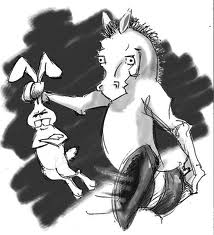
What does a peacock’s tail have to do with any of us?  Under pressure, we all revert to our strengths, whether or not the behavior pattern is appropriate. We come to believe that our perceived strengths are always going to be able to win the day for us.  As a result, we “do what comes naturally,” even if it wasn’t always “natural,” but is simply a habit that we have fallen into because it worked most of the time.  It’s easy enough to figure out why this is so.  We crave approval, so we overreact to praise for strengths.  We become a sort of one-trick pony, even when that trick is inappropriate.

Of course, sometimes we can fall into the same type of habit without being encouraged by praise.  Instead, we simply listen too well to conventional wisdom. We follow the rule that if taking a spoonful of medicine is a good thing, then drinking down the whole bottle should be a great thing.  It’s easy enough to pooh-pooh this idea as ridiculous, but consider how often it plays out in our own lives.  For example, many of us exercise to improve our strength and overall health, but there’s always a break-even point. When we over-exercise, we no longer become stronger.  Instead, we strain our muscles, hurting ourselves in the process, and actually decreasing our performance.

The same kind of thing can occur with over-exercising our strengths. Our overall performance could decline, because we continue to repeat behaviors that worked for us in the past, but no longer serve to get the job done.  Our former strengths, when overplayed, can actually become a weakness. When that that happens, the same strengths that supported our successes can turn into professional liabilities.  It’s important to make sure that doesn’t happen to you, or to the people that work for you.

Consider these examples:

  • Joan was considered one of the best people in her department at consensus building.  When she was placed in charge of a large, deadline-sensitive project, Joan spent so much time trying to make sure that everyone on the project team was in agreement on every aspect of the project, that the project fell hopelessly behind schedule and she had to be replaced.
  • Bill was able to inspire his team because he always spoke and acted with supreme confidence.  He ran into problems when his self-confidence led him to arrogantly dismiss anyone who disagreed with him.
  • Ricky’s persistence helped him push through to completion on projects that stymied others.  He finally lost his job when his persistence turned into blind obstinacy, and he kept pushing forward on a project in spite of compelling evidence that there was no chance for success.
  • Marie’s attention to detail saved the day on many projects.  But when that diligence started to border on perfectionism, her team rebelled.

Any of the individuals in these examples could be a valuable contributor to your team, but it’s easy to see how their strengths, overplayed or used at the wrong time or in the wrong place, could turn into a debilitating weakness and impair overall team performance.

If you are like me, you may see a little bit of yourself in Joan, Bill, Ricky or Marie.  So far, so good. Recognizing that you want to improve is a good first step. Figuring out what to do about it is the trickier part. On one hand, you need to be able to build, grow and flex your strengths to achieve personal satisfaction and professional success. On the other hand, you also need to be able to learn when over-exercising your strengths gets in the way of personal and professional growth.

How can you learn to change your approach while still maintaining confidence in your own strengths? These ideas might help you find the right balance:

Look first at how your strengths have contributed to your success.  Describe your strengths; take the time to write them down in your notebook.  Think about when you normally exert them? How have they contributed to your success? In which situations do the strengths have the most positive impact? How do others react to these strengths? What are the outcomes after flexing the strengths? The goal here is to determine when the strengths were demonstrated appropriately and effectively.  If you have a coach or a mentor, make sure to get their perspective on the situation.

Consider the flip side — when your strengths have detracted from your success. Describe a time when exerting one of your strengths did not produce the intended results. What was the circumstance? Who was involved? What was his or her response? What was the ultimate outcome?  Dialogue with your coach or mentor can play a particularly helpful role at this stage, since we are often completely unaware of how people react to our behaviors, especially when they are our “go-to-at-crunch-time” behaviors.

Identify the cues that can help you see when a strength becomes a liability or when the break-even point is reached.  Compare the successful and unsuccessful scenarios. How did the circumstances or environments differ? How did the individuals involved in each circumstance respond differently? What other cues were present to reflect whether the strength was exercised effectively or not?

Create a plan to make yourself more aware of the break-even point in future situations. How will you modify your approach when cues arise indicating that a strength is becoming a liability? What feedback or other information will you need to ensure you are flexing strengths to support successful outcomes? Who will provide this feedback and when?

Because you have used your strengths and subsequently reaped rewards in the past, you might be reluctant to examine the possibility that your strengths have the potential to become problems.  It’s easier to simply defend your current approach, blame others for being jealous of or threatened by your demonstrated strengths, or excuse your behavior by telling yourself that others are misinterpreting your intentions.

Don’t let it happen to you.  Pay attention to how you use your strengths.  Remember the peacock’s tail.


Consequences and Accountability

One of my clients likes to talk about the importance of accountability. He believes that it is critical that the people who work for him feel a sense of accountability for the results of their efforts.  I think he may be a bit confused when he talks this way about accountability, as if it arises naturally or intrinsically within people.  Maybe he is confusing a sense of responsibility for results with a willingness to be held accountable.  [I have to admit that it is easy to get confused when talking about responsibility and accountability.  According to Thesaurus.com, the synonym for the word responsible is “accountable,” while the synonym for the word accountable is “responsible.”]  Let’s take a closer look at the two ideas to see if we can find what I believe is a critical distinction between the two.

The Latin root word for responsible is responsus, which originally conveyed a sense of moral obligation.  The more common definitions of “responsible” include this idea of being responsible for something. That’s the sense that most of us take when we use the word. It connotes an internalization of obligation; a personal ownership of the duty.  Failure to deliver when you are responsible for something can be the root of feelings of guilt and shame.

The origin of the word accountable in the English language occurs sometime between the early part of the 14th century and the late 16th century, from the combination of the words “account” and “able,” meanst “liable to be called to account.” [Of course, the concept of account-giving has ancient roots in record keeping activities related to governance and money-lending systems that first developed in Ancient Israel, Babylon, Egypt, Greece and Rome.  One of my personal favorites in this vein is Parable of the Talents, Matthew 25:14-30.]  In any event, that early English usage is not far from a current dictionary definition of accountable, an adjective meaning:

“subject to the obligation to report, explain or justify something; answerable.”

The noun accountability, first appearing in the late 18th century, is defined by the Merriam Webster Dictionary as follows:

“the quality or state of being accountable; especially : an obligation or willingness to accept responsibility or to account for one’s actions.”

Andreas Schedler in his 1999 essay,  “Conceptualizing Accountability,” offers this conceptual definition of accountability:

 “A is accountable to B when A is obliged to inform B about A’s (past or future) actions and decisions, to justify them, and to suffer punishment in the case of eventual misconduct”

I like this definition a lot, as it makes perfect sense to me.  The critical element of the definition is that you have to be accountable to someone.  In turn, someone has to hold you accountable.  Accountability is something that is demanded, and, if it is to be more than simply the idle use of a word, consequences must accompany the accountable actions. There is very clear “Do-X-or-Else-Y-Will-Be-Done-to-You” element involved.

This is where many organizations let things slip.  They sing the praises  of accountability.  They acknowledge accountability as a core value. But when push comes to shove, they threaten negative consequences but don’t follow through. They fail to uphold the Three Commandments of Consequences:

  1. Make consequences Personal
  2. Make consequences Immediate
  3. Make consequences Certain

Personal:  Consequences should be as personal as you can make them.  It does not matter if consequences are real or imagined. Perceived consequences are real for that person.

Immediate:  When someone you are holding accountable for a result fails to deliver as agreed, you don’t want to wait to deliver consequences.  You want the consequences to be felt as immediately as possible.  The impact of short-term consequences is far more powerful than long-term consequences.

Certain: Always deliver the promised consequences.  The real tragedy is that by failing to hold people accountable for the little things, by delivering a small dose of negative consequence in a timely fashion, you make it so much harder to deliver consequences when someone fails you in a big way.  Realize that if you pull the trigger on little things, you never even have to get the gun out on big things.  In this regard, I will always remember a quote from coach and trainer, Tom  Conellan:

“A well aimed, well-timed BB is more significant as a deterrent than a poorly timed, poorly aimed howitzer.”

Here’s the bottom line:  Consequences are where the rubber meets the road for accountability.  Without consequences, there is no accountability.  If you are not getting the results you expect, don’t complain that your people don’t behave as if they feel accountable for results. Ask yourself, “How well d0 I hold people accountable?”

Strategic Business Analysis is Messy Business

A while back I asked my son-in-law, who works for Cisco in San Jose, what kind of job he would pick if he were able to choose from anything available at his company.  He told me that he’d really like to work on business strategy, maybe performing strategic business analysis.

Everyone who has been subjected to a traditional business education in North America or Europe, in particular anyone who has completed an MBA program, is –  or at least thinks they are — familiar with the concept of Strategic Business Analysis. I, for one, thought I knew what the term  meant: a rigorous examination of a firm’s strengths and weaknesses in its current competitive environment, coupled with an assessment of what its capabilities might allow it to achieve within some reasonable future time frame.

I got curious and decided to google the phrase and see what kind of results would appear on my computer screen. Try it for yourself and you’ll find over 19 million items showing up in the specific search result for “strategic+business+analysis.” [If you just type the words “strategic business analysis” in the search bar you’ll get over 95 million results.] Unfortunately, you won’t find out exactly what it is.  What you will find out is that most schools with a business curriculum teach it, many consulting firms say that they do it, lots of companies are looking for people to fill jobs where they will do it, and hundreds of thousands of people want to land jobs as strategic business analysts.

I wasn’t happy with that result, so I checked in with Wikipedia, one of my favorite reference resources.  While Wikipedia has no entry for strategic business analysis, it does provide a lengthy article on business analysis. The closest I could get to something that looked like what I would recognize as strategic business analysis was detailed in the Wikipedia article under “Enterprise analysis or company analysis” and included the following description:

Focuses on understanding the needs of the business as a whole, its strategic direction, and identifying initiatives that will allow a business to meet those strategic goals.

That seemed to fit closely enough to my originally offered definition that I was willing to work with it.  Looking deeper, though, I got mired in what I feel is the fundamental problem with most approaches to strategic business analysis.  Just about everyone doing strategic business analysis relies on one or more analytic techniques, all of which are designed to get those performing the analysis to look broadly and deeply at the firm’s competitive situation in order to select strategic options most likely to lead to success for the organization. The Wikipedia article lists eight widely used techniques, some of which I am familiar with and a few I’ve never heard of:

There are enough acronyms on this list to keep you busy for a week, trying to figure out what they mean.  Each approach suggests that if you diligently follow the step-by-step process outlined, you’ll get a great result. But these and other techniques overlook a simple truth.  People do strategic business analysis, not robots.  People get distracted. People work under deadline pressure and hurry to complete tasks.  People tend to rely on only parts of an analysis model, and ignore others.

Most importantly, just like with crossword puzzles, we often get disconfirming information about previous assumptions we have made. When that happens while working a crossword puzzle, we erase and try again. In business, when we get disconfirming information, we tend to ignore it or deny it. We look even harder to find something, anything, that seems to confirm our earlier assumptions. Maybe that’s because there is no answer key in business.  Nobody created the puzzle, so there is no single solution.

The world is a messy place.  It is unpredictable.  As a result, strategic business analysis will always be messy, iterative and nonlinear.  We should get used to the idea.

Some people look for betting sites that are not on GamStop. Options include non GamStop casinos and other platforms not on GamStop. Others might choose alternatives not on GamStop. A few focus on finding a single non GamStop casino that matches their habits. A player who is interested in options outside traditional restrictions can consider a non GamStop casino. Some people compare different non GamStop casinos before making a choice. Comparing sites not on GamStop helps users understand which platforms offer specific games or features. People sometimes look for casinos not on GamStop to see what promotions are available. Checking out online casinos not on GamStop can show how these sites differ from those licensed in the UK. Most discussions about casino bonuses overlook their distinct applications at non GamStop casinos.
;